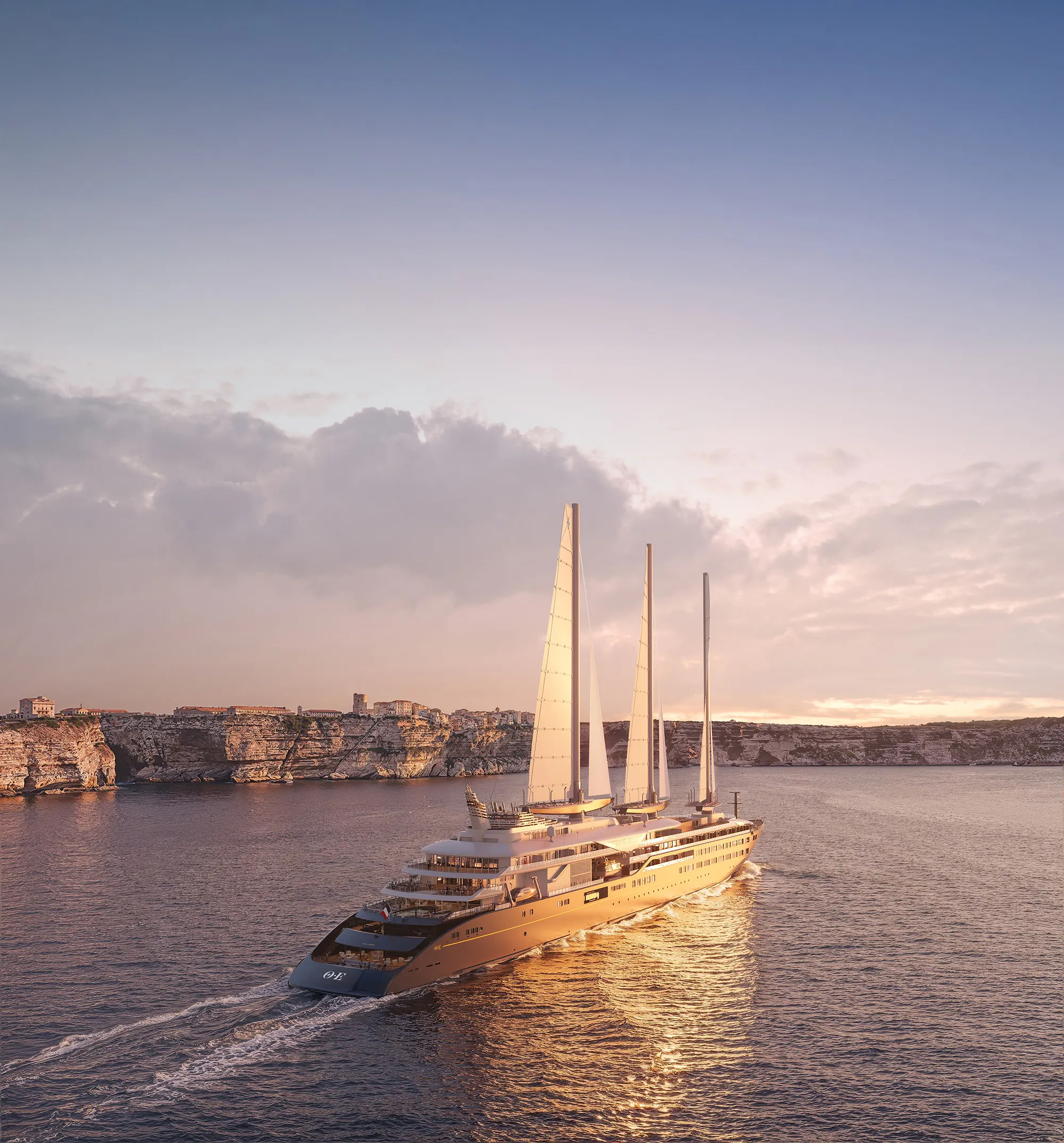
Aboard the Orient Express Corinthian

Some names seem to contain a promise all on their own. Orient Express is one of them. It evokes departure, the night slipping past the windows, the refinement of a dinner served in motion, the beauty of a décor conceived down to its finest details. An imaginary world born on the rails, nourished by cinema, literature, and the decorative arts, now finds a new expression at sea with Orient Express Corinthian, the brand’s first ship and the largest sailing yacht in the world.

Measuring 220 metres and flying the French flag, Corinthian opens a new chapter in the history of luxury travel. Conceived under the artistic direction of Maxime d’Angeac, the ship transposes the spirit of Orient Express to the sea: not as a nostalgic quotation, but as a contemporary reinterpretation of an art de vivre in motion. On board, everything seems to invite dialogue: the memory of great journeys, the demands of hospitality, the feats of naval engineering, and the precision of fine craftsmanship.

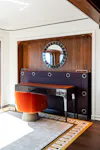
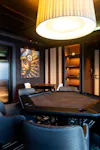
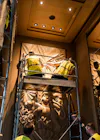
For Rinck, this adventure marks a singular milestone. The Maison contributed to Corinthian through the creation of bespoke furniture and interior fittings for several of the ship’s emblematic spaces. From reception areas to dining rooms, from suite furniture to certain more iconic pieces, the project called upon a broad range of savoir-faire: technical design, workshop production, coordination of crafts, development of finishes, and installation on board.

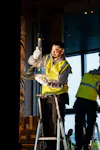
Yet it would be reductive to describe this as a simple interior fit-out. On a ship of such ambition, every piece, every panel, every detail must respond to a dual requirement: to preserve the power of the décor while adapting to an extraordinarily constrained environment. At sea, nothing is ever quite comparable to a land-based project. Weight, vibrations, safety, fire resistance, maintenance, and the movements of the ship all impose their own rules. Materials must be selected, adapted, and sometimes reinvented. Assemblies must be conceived differently. Beauty can only exist through absolute technical mastery.

It is precisely in this balance that Rinck’s contribution finds its expression: making a decorative intention possible without ever betraying its spirit. Translating a drawing into volume. Transforming a vision into matter. Bringing the precision of the workshop into the moving reality of a ship. Behind the apparent ease of a piece of furniture, a bar, a table, or a panel lie hours of studies, adjustments, prototypes, and invisible choices. What appears simple to the eye is often the result of a long sequence of decisions, dialogues, and gestures.

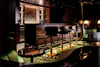
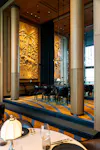
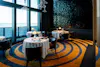
Aboard Corinthian, furniture plays an essential role. It does not merely equip the spaces: it contributes to their atmosphere. Restaurant and games tables, consoles, coffee tables, leather-clad elements, lacquered surfaces, polished metal, precious woods, and tinted glass compose a vocabulary that is at once luxurious and restrained. Nothing should feel demonstrative. Richness is revealed in the accuracy of proportions, the depth of a finish, the softness of a curve, the harmony between a material and the light that passes through it.

This taste for measure echoes the approach of Maxime d’Angeac, who embraces a reading of Art Deco without pastiche or nostalgia. What interests him is not the reproduction of an era, but the preservation of its grammar: rhythms, proportions, geometries, the dialogue between materials, and the ability to make a place into a total composition. Within this lineage, Rinck naturally finds its place. The Maison understands the language of decorators, artisans, and ensembliers; it also knows how to translate it into the constraints of the present.

Maxime d’Angeac sums up this demand through the idea of a constant dialogue between vision and savoir-faire.

“With Rinck,” he explains, “it is not simply a matter of executing, but of proposing, searching, and going further. Finding the right material, the right assembly, the right solution — sometimes lighter, sometimes more resistant, always more precise. This dialogue between the hand, technique, and intention lies at the heart of the project.”

Corinthian thus offers a particularly complete expression of Rinck’s métier. It brings together the ability to listen to a creator, to understand an atmosphere, the demands of drawing, the culture of furniture, the precision of the workshop, and the rigour of implementation in an exceptional environment. The project unites what Rinck has cultivated for generations: an intimate relationship with materials, an almost obsessive attention to detail, and the ability to bring together different crafts around a result that must appear effortless.

For luxury, here, is not measured solely by the rarity of materials or the complexity of the project. It is measured by what remains unseen. By the fluidity of a door, the alignment of a joint, the stability of a piece of furniture, the way an element embraces the architecture that receives it. It is measured by that sense of self-evidence that can only be achieved through patient, precise, almost silent work.

In Saint-Nazaire, within the monumental world of Chantiers de l’Atlantique, Corinthian took shape at the intersection of two worlds: naval industry and the decorative arts. A great ship is always a technical feat. But when it bears the name Orient Express, it also becomes a stage, a décor, a narrative. It must inspire dreams before departure has even begun. It must give its passengers the feeling of entering a story larger than themselves.

Rinck inscribes its own part in this story with discretion and exactitude. Not as an imposed signature, but as a sensitive presence within materials, volumes, and uses. Aboard the first Orient Express ship, the Maison contributes to making hospitality a complete art, in which every detail takes part in the experience of travel.

With Corinthian, Orient Express takes to the sea. And through this exceptional project, Rinck reminds us that the most beautiful décors are never born of an idea alone, but of the encounter between a vision, crafts, and the women and men capable of giving it form.

Frontline-Studio

Frontline-Studio

Rinck · depuis 1841
L’Assistant Rinck
Échange confidentiel