Journal

|

Heritage

From Paris to New York: an American Story

Rinck’s history in the United States did not begin with an opening or even with a project, but with a movement. A movement shaped by craftsmanship crossing the Atlantic, driven by a desire to transmit, to connect, and to establish itself within a new cultural landscape.

The earliest traces of this presence date back to the 1930s. In 1936, Rinck furniture was already being sold in Chicago, a discreet yet telling sign of the growing interest in French decorative arts in America. Three years later, in 1939, the house took part in the New York World’s Fair within the French Pavilion dedicated to the Decorative Arts. Rinck presented a sideboard showcasing the excellence of French craftsmanship, combining precious wood veneers, gilded bronzes, and refined decorative details. The use of techniques such as verre églomisé — still relatively uncommon at the time — already reflected the house’s ability to bridge tradition and modernity. In this international context, Rinck asserted what would become its signature: the ability to embody a distinctly French art de vivre, extending far beyond the objects themselves.


Yet it was in the mid-20th century that this relationship took on a more personal dimension. In 1954, Daniel Rinck, son of Maurice Rinck, left France for the United States. He arrived not only as a craftsman, but also as a cultural ambassador. Through this departure, a part of the family’s history opened itself to another world. Driven by an almost pioneering spirit, he carried with him a legacy he would dedicate himself to preserving, adapting, and transmitting. First settling in St. Louis and later in California, where he would establish lasting roots, he helped structure the house’s presence across the American territory and became co-president of Rinck USA as early as 1955.

A master craftsman and a man deeply committed to transmission, Daniel Rinck embodied for decades a living connection between two cultures. Through him, the rigor of French decorative arts encountered American energy and freedom. His journey left a lasting mark — both human and professional — that continues to shape Rinck’s story in the United States today.

Following this first phase of establishment, Rinck’s presence in America evolved more organically, through projects, encounters, and collaborations. From the 1990s onward, the house gradually reaffirmed its place on the American scene through exhibitions and, above all, through large-scale commissions.

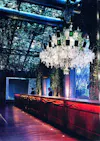
The 2000s marked a turning point. In New York especially, Rinck contributed to iconic venues such as the Buddakan restaurant, where the house executed all millwork and carved decorative elements in collaboration with leading figures of international design, including Christian Liaigre and the duo Gilles & Boissier.

In the same spirit, Rinck also collaborated on projects led by Philippe Starck, contributing to interiors where artisanal craftsmanship engages in dialogue with bold contemporary design languages. In every setting, the house found its place by bringing what defines its identity: precision, materiality, and an uncompromising attention to detail.

Over the years, this presence expanded across the United States. From New York to Florida, from the East Coast to California, Rinck has worked on private residences as well as hotels and restaurants, adapting its language to each context while remaining faithful to its identity.

More recently, this relationship has evolved into something even more collaborative. In Palm Beach, the house joined the Palm Beach Atelier, a space initiated by designer Sarah Magness that brings together leading names in architecture and interior design. Conceived as a place for dialogue and inspiration, the Atelier gathers complementary savoir-faire within an environment designed as a true living space. There, Rinck fully expresses its identity through paneling, furniture pieces, and creations that combine traditional techniques with contemporary approaches, in a setting where craftsmanship becomes a shared language.

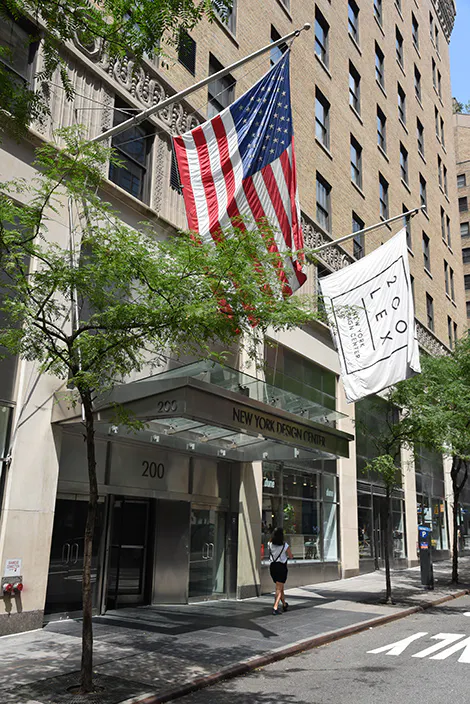
The opening of a showroom in New York in 2022 further strengthened the house’s long-term presence in the United States. Located within the New York Design Center on Lexington Avenue — an iconic destination for design and decoration in New York — the space reflects Rinck’s desire to establish itself permanently within the American design landscape.

Today, this presence relies on a structured local team led by Thibaut Ngo, working closely alongside Valentin Goux. Together, they oversee the development of the house across the American market, maintaining direct relationships with clients, decorators, interior designers, and general contractors.

Having spent several years working within the American market, Thibaut Ngo has developed a deep understanding of its dynamics, key players, and expectations. “It is a highly dynamic market, where responsiveness and the ability to provide solutions are essential,” he explains.

Project management therefore relies on a constant dialogue between France and the United States. While a large part of the manufacturing — paneling, furniture, and bespoke interiors — is carried out in the house’s workshops in France, where its core expertise is concentrated, part of the production and implementation also relies on a network of partners across the United States. This organization allows Rinck to adapt each project to the realities of the American market while maintaining a high level of craftsmanship and close relationships with clients and collaborators on site.

“It is a highly dynamic market, where responsiveness and the ability to provide solutions are essential”, Thibaut Ngo - Director of Rinck’s U.S. operations

For nearly a century, Rinck has been building in the United States a story shaped by continuity and renewal. A story carried forward by individuals, encounters, and a shared commitment passed down from one generation to the next. Today, this journey resonates with particular significance through the 2026 Arthur Ross Awards, which recognize the house’s place within an exacting international scene. More than a distinction, the award stands as part of a story already deeply rooted on both sides of the Atlantic.