Activities

|

Savoir-Faire

Precious Materials

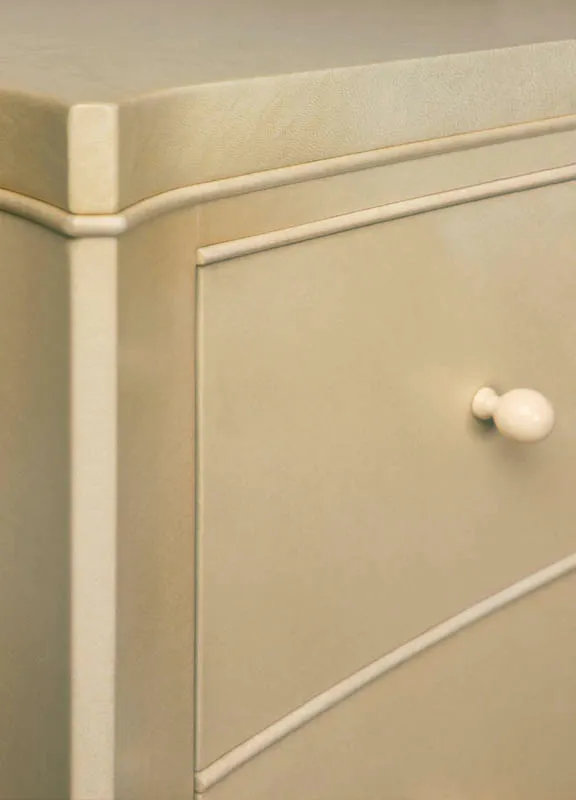
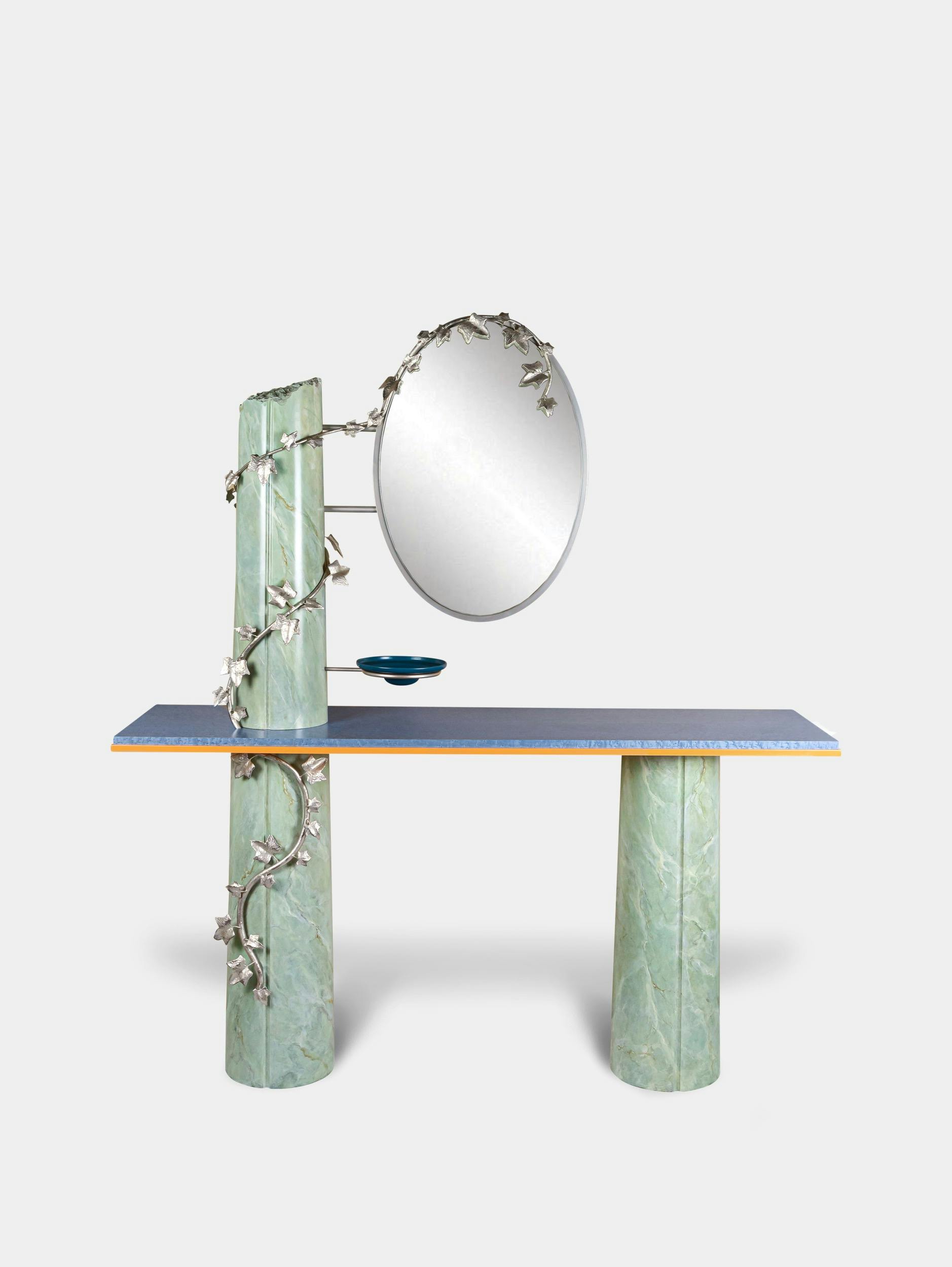
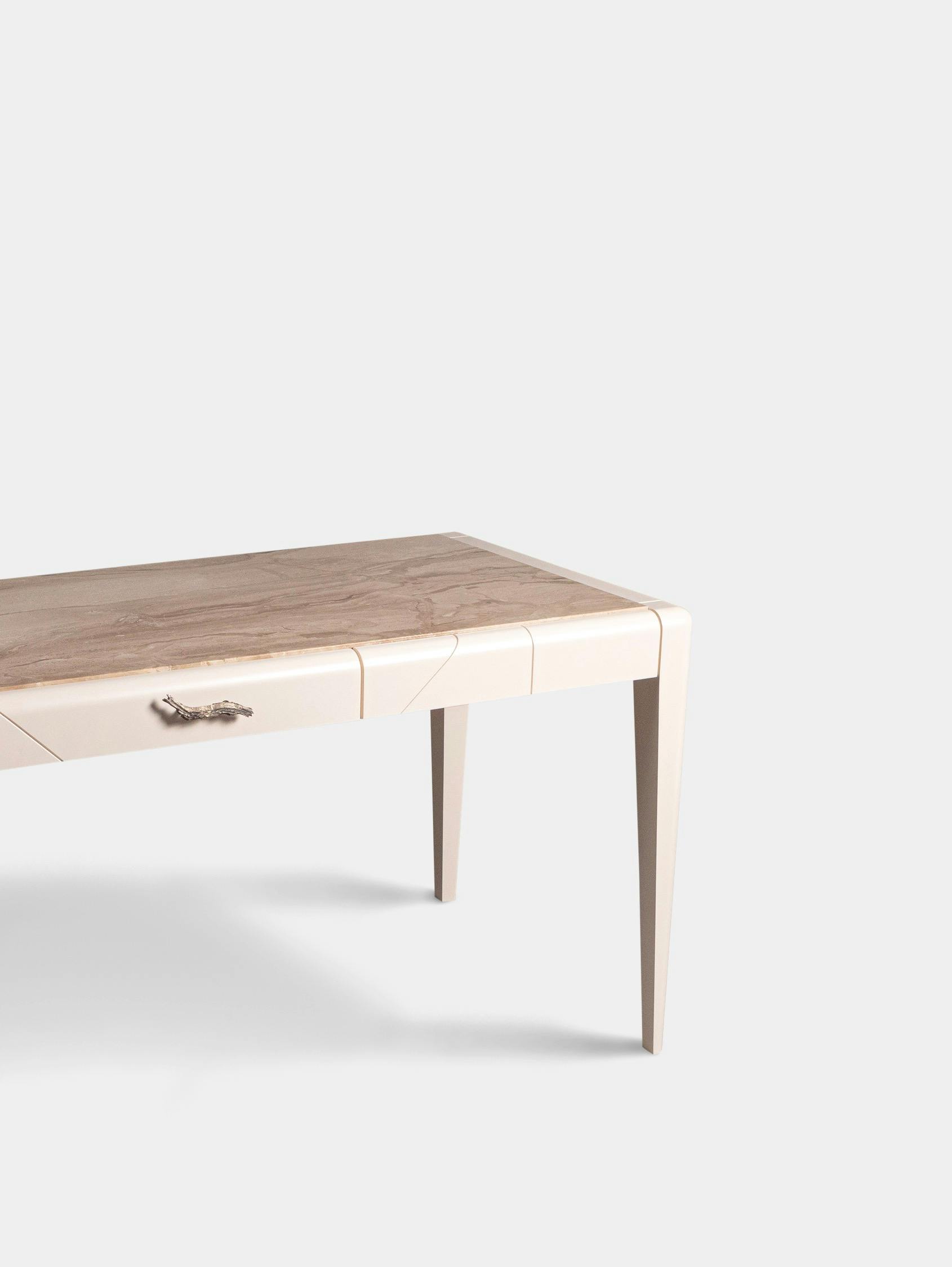
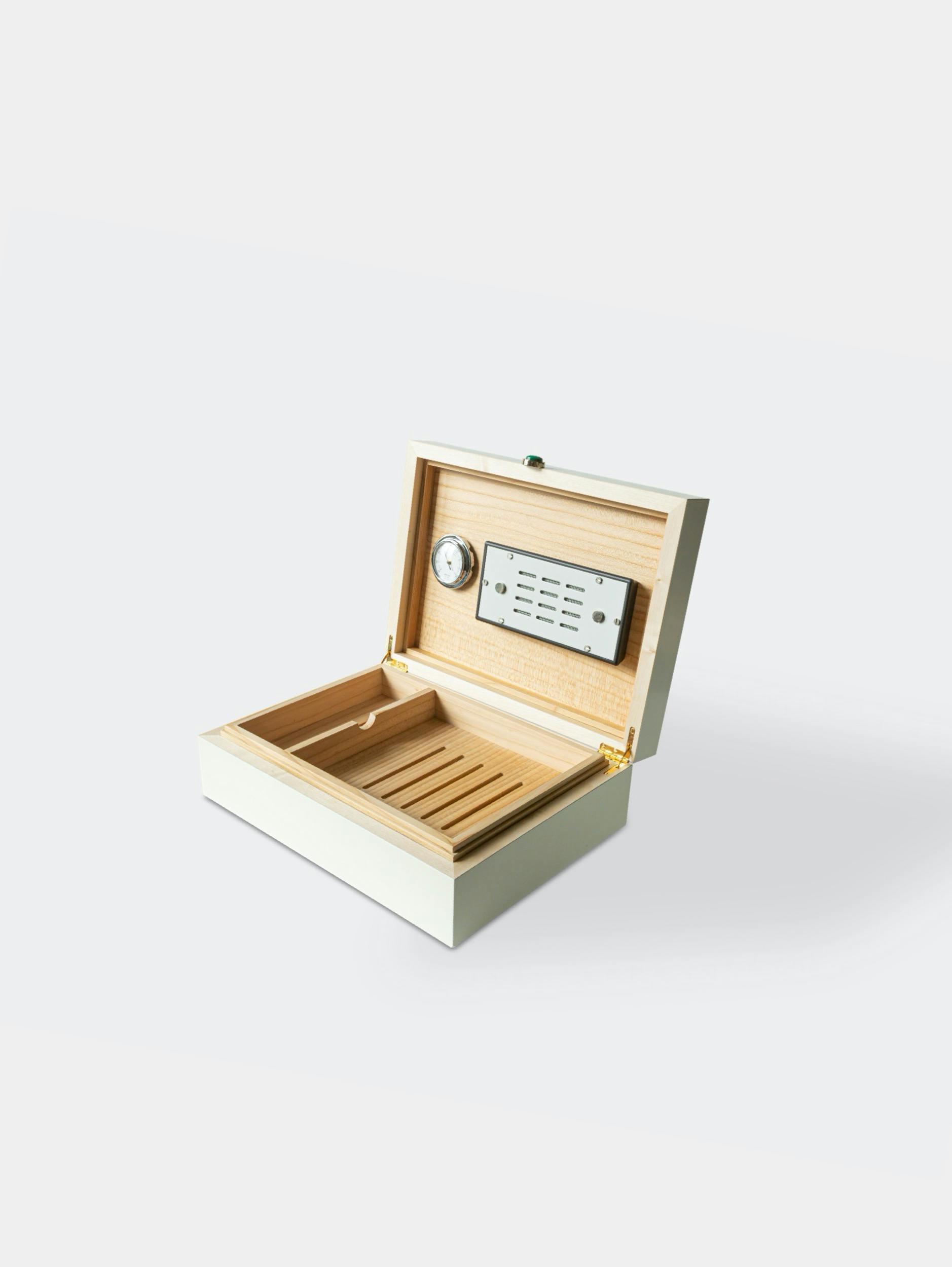
The many forms of savoir-faire mastered by the artisans at Rinck make it possible for them to incorporate precious materials when crafting custom furniture and executing outfitting projects. Precious materials such as shagreen, parchment, and semiprecious or ornamental stones – sought after for their rarity or originality, appreciated for a natural beauty that is showcased by the technical expertise of our craftspeople – give a project an added elegance by virtue of their unique qualities.

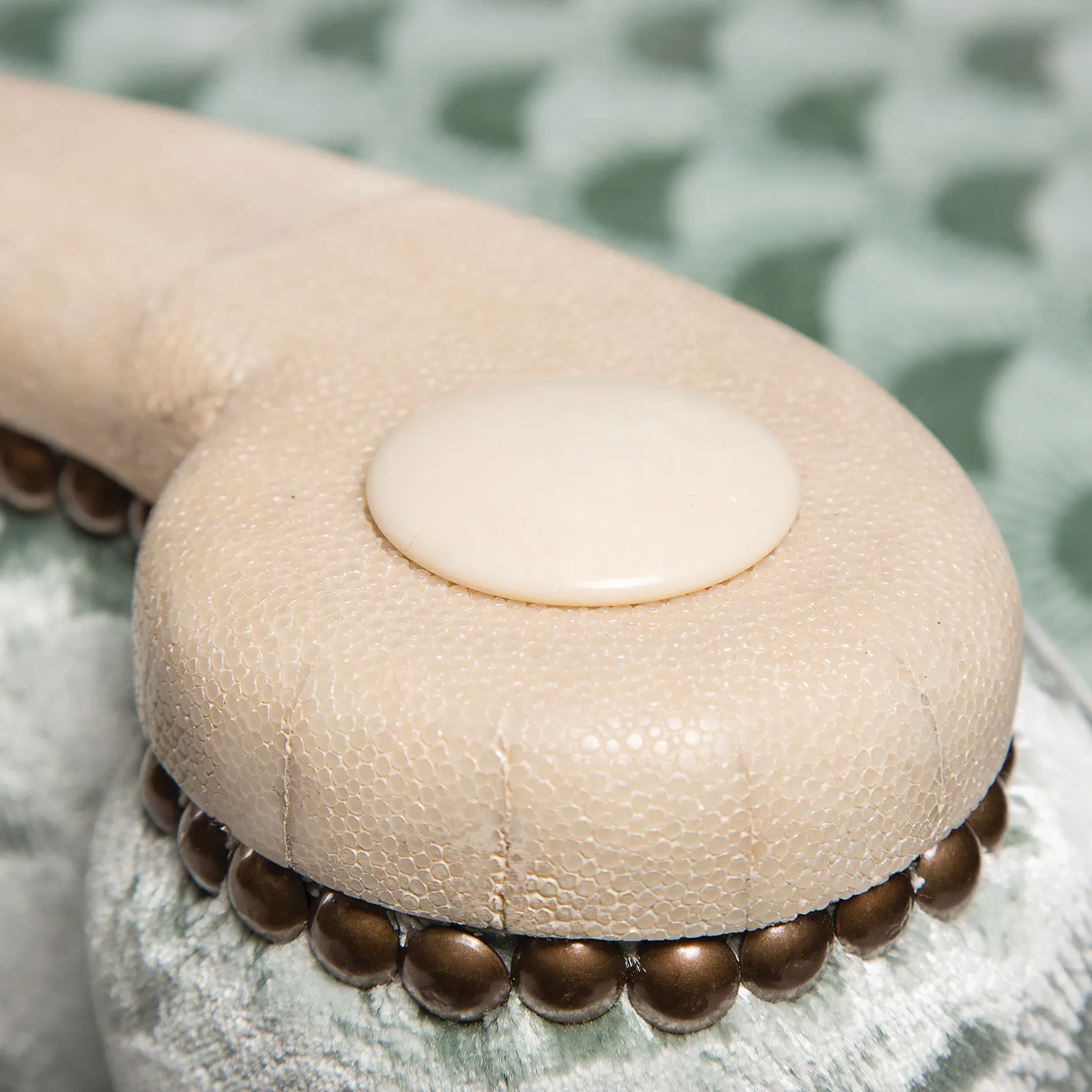
Shagreen

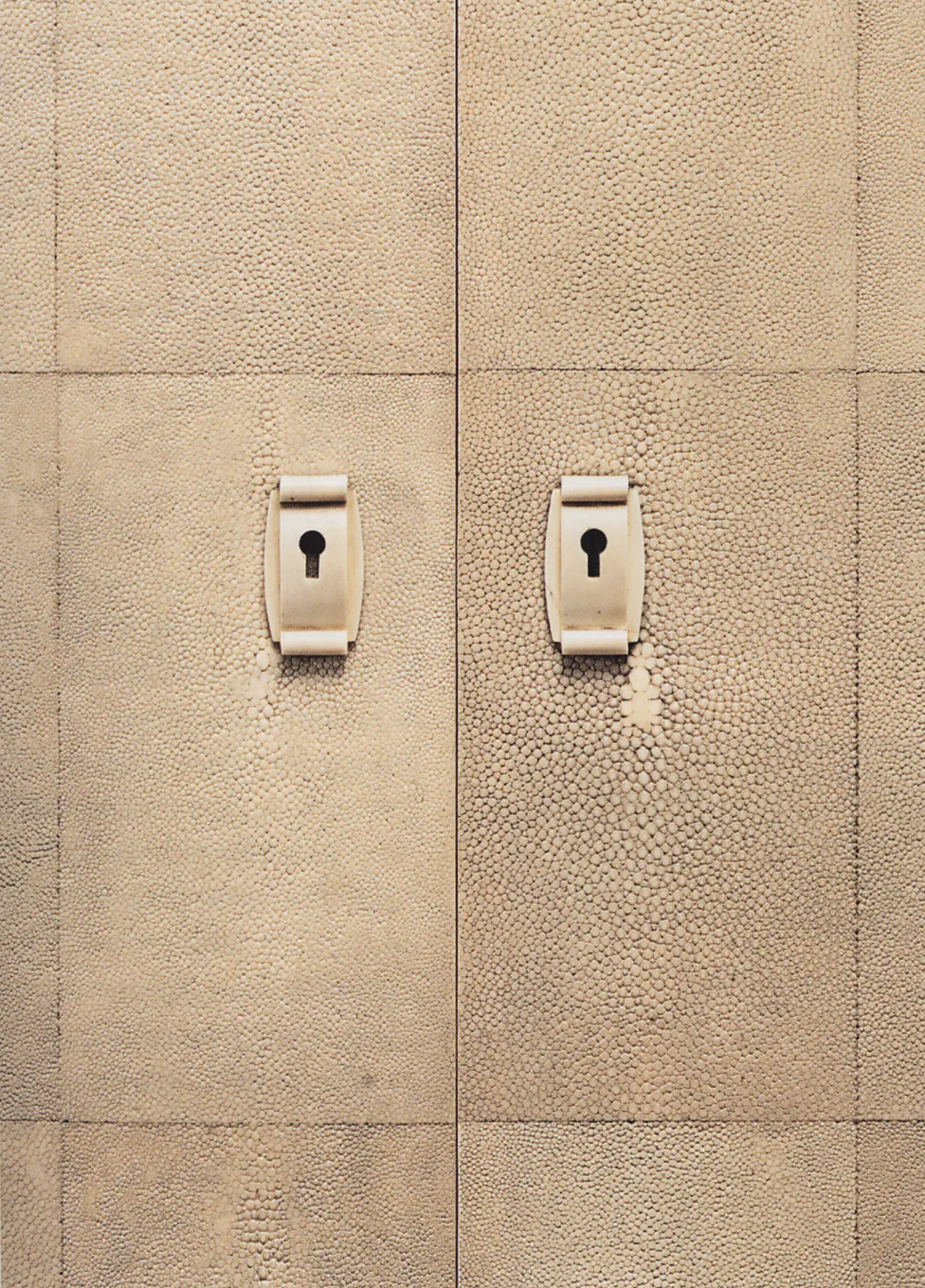
Shagreen is a leather made from aquatic creatures such as rays or dogfish. It has a distinctive appearance with uncommon natural patterns created by features such as pebble-shaped scales that resemble a myriad of small, tightly clustered pearls. These highly decorative scales give this hide a very rough surface. Top-quality handcraftsmanship is required before any shagreen can be used in interior décor projects. The scale pattern varies slightly depending on the species, with the “pearls” being considered “coarse-grained” or “small-grained.”

Cherished in the countries of the Orient as far back as the 8th century, shagreen has exceptional physical properties that destined it to cover scabbards, saber handles, and even samurai armor. In Europe, traces of skilled shagreen use can be found as early as the 16th century. Carpenters found its abrasiveness effective for sanding or polishing wood, physicians applied its properties to treat patients, while artillerymen, like the samurai, sheathed their sword and dagger handles with it, as the skin’s roughness ensured a better grip on the weapon.

In 18th-century France, master sheath-maker Jean-Claude Galluchat managed to find the tanning and dyeing technique that allowed him to adorn small objects with the substance, which why it is known today in French as galuchat. The skin’s Eastern origins made it a rare and expensive material and it was thus only used for luxury products, such as jewelry boxes and sewing or writing cases. Madame de Pompadour, the official chief mistress to Louis XV, and Madame Émilie du Châtelet, a French natural philosopher and mathematician, were very fond of shagreen and contributed to its expansion and image as an elegant, sophisticated material.

While public interest in the art of shagreen waned in the 19th century, it saw a resurgence during the Roaring Twenties, when the need for luxury and liberties – generated by the deprivations of war – skyrocketed. The great creative minds in the field of decorative arts featured shagreen on their furniture pieces, or even complete furniture ensembles. For designers and decorators such as Paul Iribe, André Groult, Jules Leleu, and Jean-Michel Frank, it became a favorite material. At this time, shagreen was synonymous with modern elegance, at once chic and streamlined, sophisticated yet simple. It retains this image to this day and merits such veneration, as this art requires exceptional skill and savoir-faire.
A number of steps must be taken to prepare a stingray hide before it can be used to sheath or decorate. These include such things as eliminating dust or traces of algae and flattening the skin by putting it under a press to render it workable. In its natural state, stingray skin is a dull grey-beige, meaning that it is now often dyed for use. Depending on the inspiration of the designer or decorator, shagreen can also be lacquered, left uncoated, or a patina can be created with wax or varnish – it all depends on the finish desired. For illustration purposes, it could be compared to polished marble when a hard, shiny finish is wanted, which is created by sanding. Whatever the choice of finish, there are many delicate and difficult operations to be performed calling for artisanal expertise, and this laboriousness is partly responsible for the material’s cost. Shagreen has long defied fashion trends and is just as appreciated today as it was in eras past. With details of infinite richness and a luster worthy of precious stones, it is an inexhaustible source of inspiration for designers.

Today, technical innovations and research performed by innovatively minded artisans mean that materials such as silicone and elastomer can be used to reproduce the look of shagreen. Applying the same techniques as those used in sculpture, the crafters make a mold to capture the imprint of the skin and then pour in these innovative materials. The result is a kind of sheet that they can work with freely, attaching it to the piece of furniture or wainscoting panels.

Parchment

A number of steps must be taken to prepare a stingray hide before it can be used to sheath or decorate. These include such things as eliminating dust or traces of algae and flattening the skin by putting it under a press to render it workable. In its natural state, stingray skin is a dull grey-beige, meaning that it is now often dyed for use. Depending on the inspiration of the designer or decorator, shagreen can also be lacquered, left uncoated, or a patina can be created with wax or varnish – it all depends on the finish desired. For illustration purposes, it could be compared to polished marble when a hard, shiny finish is wanted, which is created by sanding. Whatever the choice of finish, there are many delicate and difficult operations to be performed calling for artisanal expertise, and this laboriousness is partly responsible for the material’s cost. Shagreen has long defied fashion trends and is just as appreciated today as it was in eras past. With details of infinite richness and a luster worthy of precious stones, it is an inexhaustible source of inspiration for designers.

Parchment is a leather made from the skin of sheep or goats.  Our passionate artisans have specific savoir-faire that reveals its exceptional qualities, seeking as much to tame as to showcase the material. It has a remarkably fine grain and great transparency, with a silky and delicate texture that render it uniquely precious. Its lightly polished surface has a very slight pearlescence, yet it is an extremely sturdy and long-lived material: Unlike paper, which yellows, parchment can retain its natural whitish color for a very long time. Each skin has a unique hide pattern, making parchment a material of choice and a source of inspiration for contemporary designers.

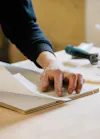
Nevertheless, revealing the many qualities that make it such an exceptional material requires many hours of processing in a multitude of steps.  The parchmenter must first clean the hides, then scrape and thin them, and polish and whiten them with a pumice stone. This increasingly rare savoir-faire is practiced by a very small number of farmers, who choose to work these skins so that this precious material is not lost. Once this preparatory work is completed, the artistic use can begin, carried out by artisans who have already finalized the layout plan for the parchment’s placement. This is a demanding and difficult process, because the material is finicky and unpredictable and can only be worked with manually.

Like all leather, parchment can be dyed, but only an experienced and talented craftsperson can bring out its full depth. Depending on the desired effect, the artisan applies a patina to the hide to give it a lived-in quality or soul: a coating can be applied, for instance, to create an aged look, or the appearance of cracked leather.

Parchment is luminous and soft to the touch, and creation of this exceptional material involves many different forms of savoir-faire. These skills, which we apply in our woodworking and interior-outfitting workshops, let us reveal the material’s full splendor, thus preparing it for use in any number of projects.

Ornamental & Semiprecious Stones

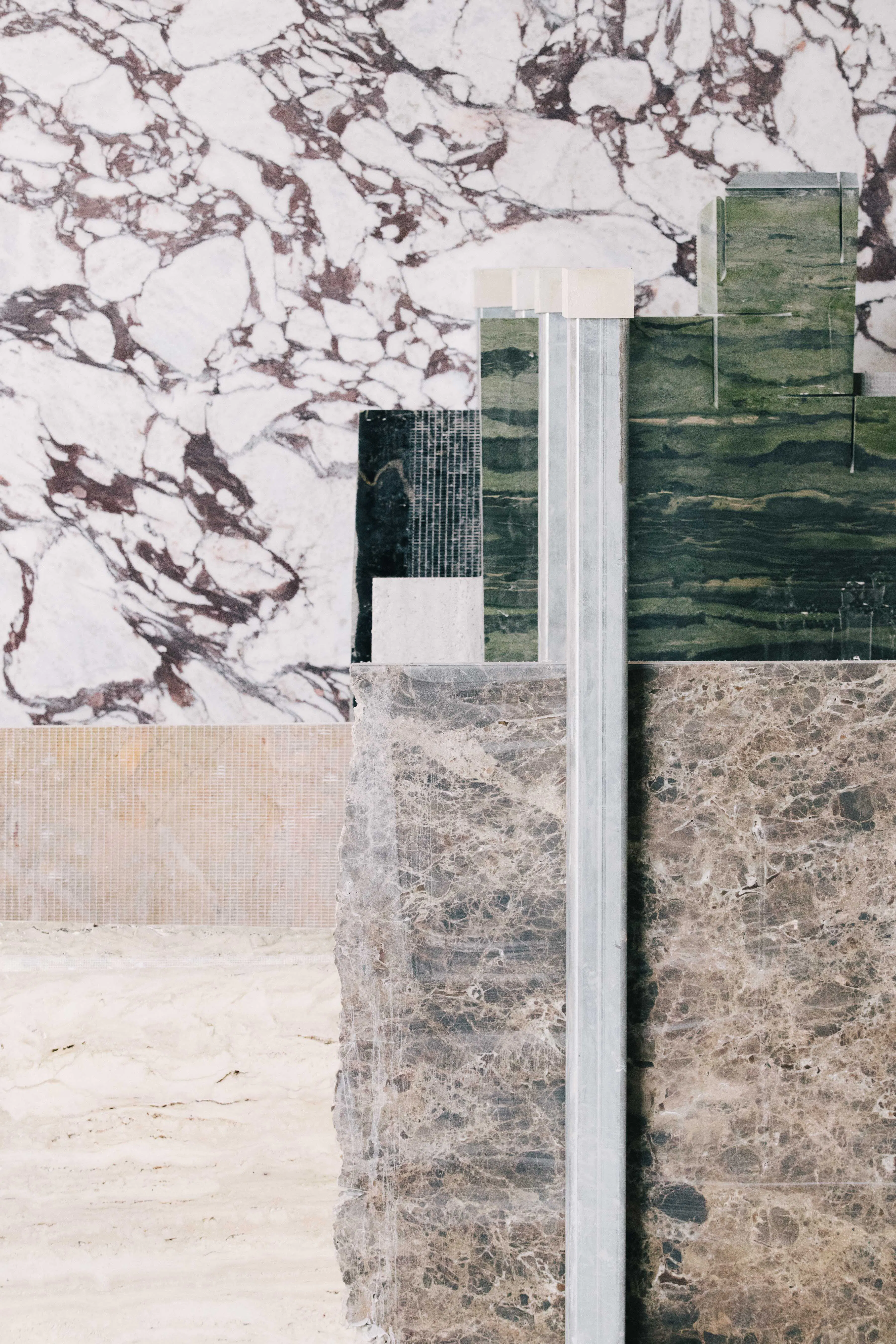
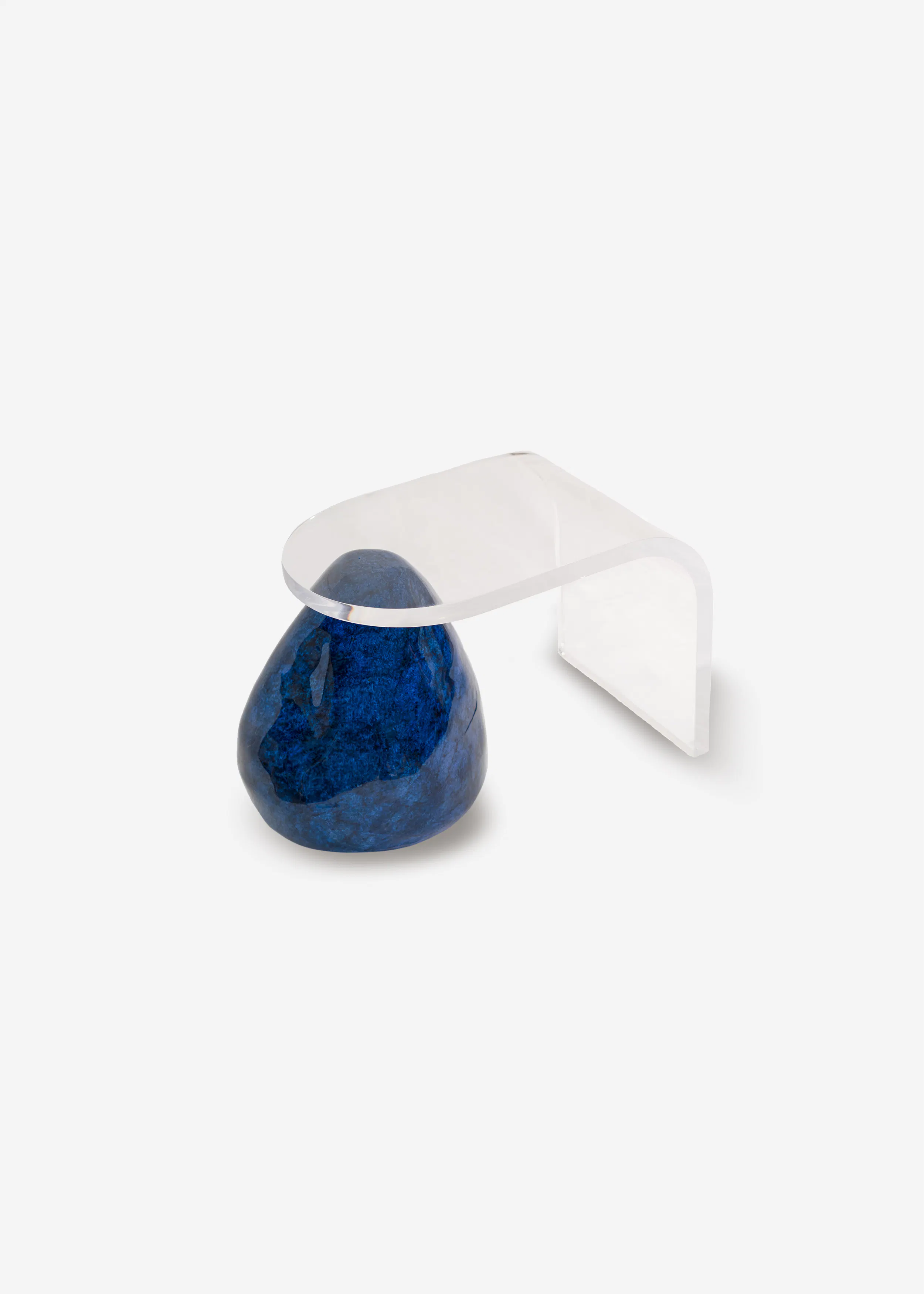
The mineral world surrounds us. Since Antiquity, stone has been extracted, cut, polished, assembled, and elevated in the service of architecture, sculpture, ornament, and furniture. Prized for its natural beauty, its chromatic variations, the depth of its veining, and its enduring qualities, it holds a singular place among the precious materials used in bespoke interiors and custom furniture.

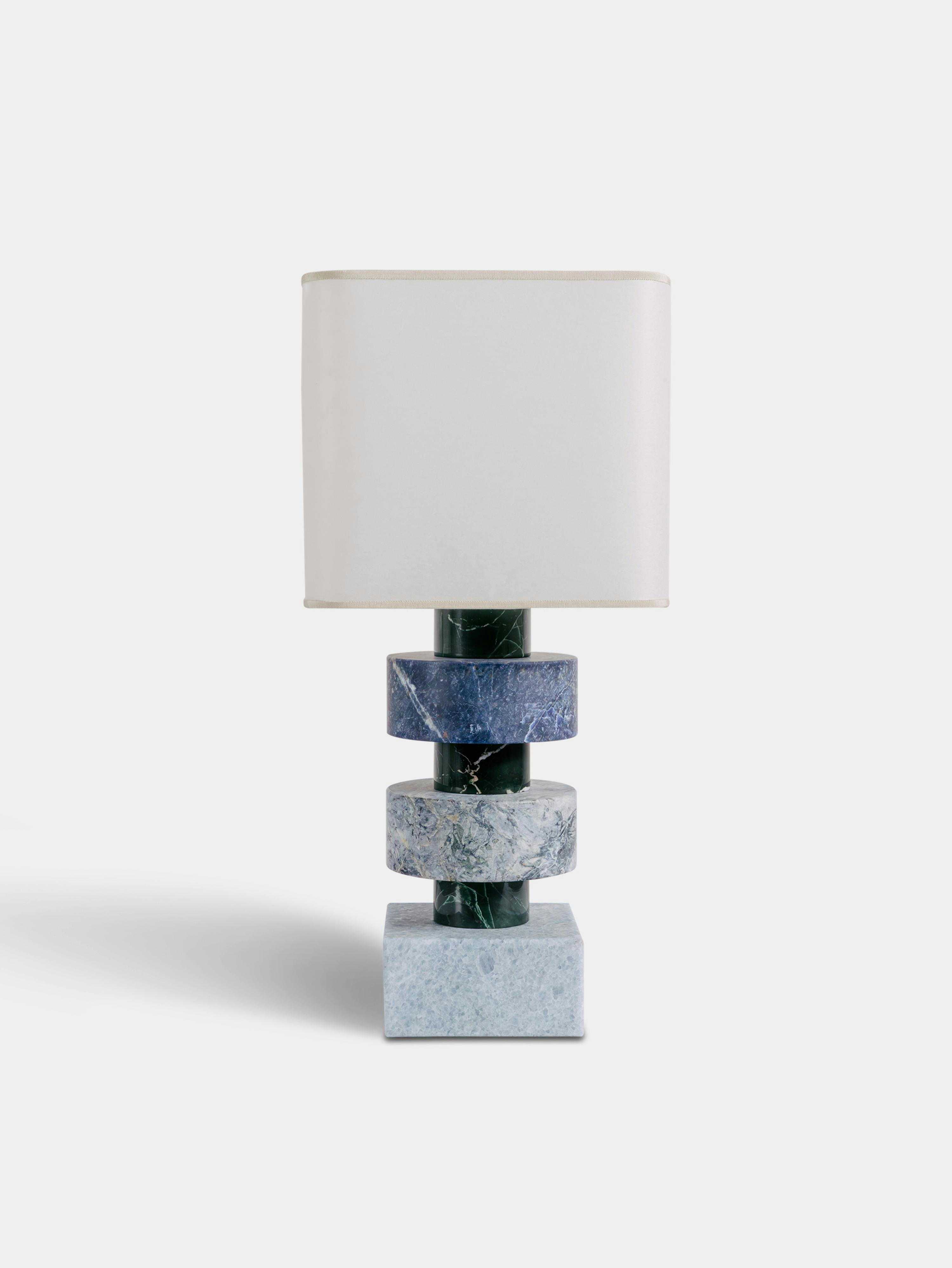
Marble, travertine, granite, quartzite, slate, onyx, agate, and malachite: ornamental and semiprecious stones are distinguished by their richness of color, density, brilliance, or transparency. Some captivate through the graphic power of their veins; others through the softness of their nuances or the almost pictorial intensity of their natural patterns. Each slab, each block, each fragment bears a design of its own. This singularity makes stone a living material, never entirely reproducible, and an inexhaustible source of inspiration for architects, decorators, and designers.

The decorative use of stone spans civilizations. The Egyptians, Greeks, and Romans used it for temples, sculpture, mosaics, floors, and ceremonial objects. Later, palaces, private mansions, and aristocratic residences made it a marker of prestige and permanence. Across the centuries, stone has accompanied the history of taste: at times monumental, at times precious, sometimes discreet, sometimes spectacular, yet always retaining its power to anchor a place in a certain timelessness.

In interior architecture, ornamental stones both structure and enrich a space. They dress floors, walls, countertops, bathrooms, fireplaces, and backsplashes. They may be used across generous surfaces to bring depth to a decor, or introduced in more precise touches, as a precious detail emphasizing a line, a base, a skirting board, a tabletop, or a geometric composition. Combined with wood, metal, leather, or glass, they create contrasts of material that heighten the character of an interior.

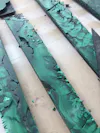
In furniture, their use requires the same exacting approach. A semiprecious stone can enhance a tabletop, animate a façade, compose a marquetry pattern, or enrich an exceptional object. Malachite, with its concentric motifs and deep green tones, brings an almost hypnotic presence. Agate reveals transparencies, lines, and mineral accidents of great delicacy. Onyx, depending on its nature and the way it is worked, plays with light and can lend surfaces a singular depth. Marble, meanwhile, remains one of the most emblematic stones in the decorative arts, both for the diversity of its origins and the infinite variety of its veining.

Yet the beauty of a stone is never enough in itself. One must know how to choose it, read it, and work it. Before any use, the artisan observes its pattern, anticipates its weaknesses, understands its direction, tensions, resistance, porosity, and the way it responds to cutting, polishing, and assembly. The material imposes its own rules. A vein may become the starting point for a motif; a nuance, the balance of a whole; an irregularity, a detail to be preserved or carefully avoided.

Many stages are required before stone can be integrated into a project. Sawing, rough cutting, precision cutting, fitting, polishing, and assembly all demand great accuracy. Layout planning is particularly essential: it allows the slabs to be organized, the patterns to be aligned, and a harmonious composition to emerge. In the case of stone marquetry, the level of precision is even greater: each element must be cut, adjusted, and assembled with extreme exactitude so that the motif retains its full graphic strength.

Although digital tools now support certain stages of preparation and cutting, they never replace knowledge of the material nor the precision of the hand. Stonework remains a dialogue between the eye, the gesture, and time. One must know how far to go, when to polish further, when to stop, how to reveal luster without diminishing the surface, and how to respect the nature of the stone while placing it within a contemporary design.

In Rinck’s workshops, ornamental and semiprecious stones are selected for their ability to bring both sensitivity and durability to a project. They may appear in bespoke interiors as well as in furniture pieces, serving an overall composition or a precious detail. Their presence brings a particular vibration: that of a material born of deep time, shaped by nature, and revealed by the artisan.

At once mineral and decorative, powerful and delicate, ornamental and semiprecious stones give each project a singular depth. They remind us that luxury lies not only in the rarity of a material, but in the way it is understood, transformed, and enhanced. Worked with precision, they become far more than an ornament: a silent signature, inscribed in the material itself.

Rinck · depuis 1841
L’Assistant Rinck
Échange confidentiel